
When a test is worth having
Cement sheets from the 1960s to the 1980s very often contain asbestos. A test is worth doing when the age of the roof is unclear, when the sheets look unusual, or when the answer changes your plans, for example before painting, drilling or selling.
If a roof is visibly corrugated cement from before 2000, many people skip the test and simply treat it as asbestos, because the price of removal does not change much either way.
How a sample is taken
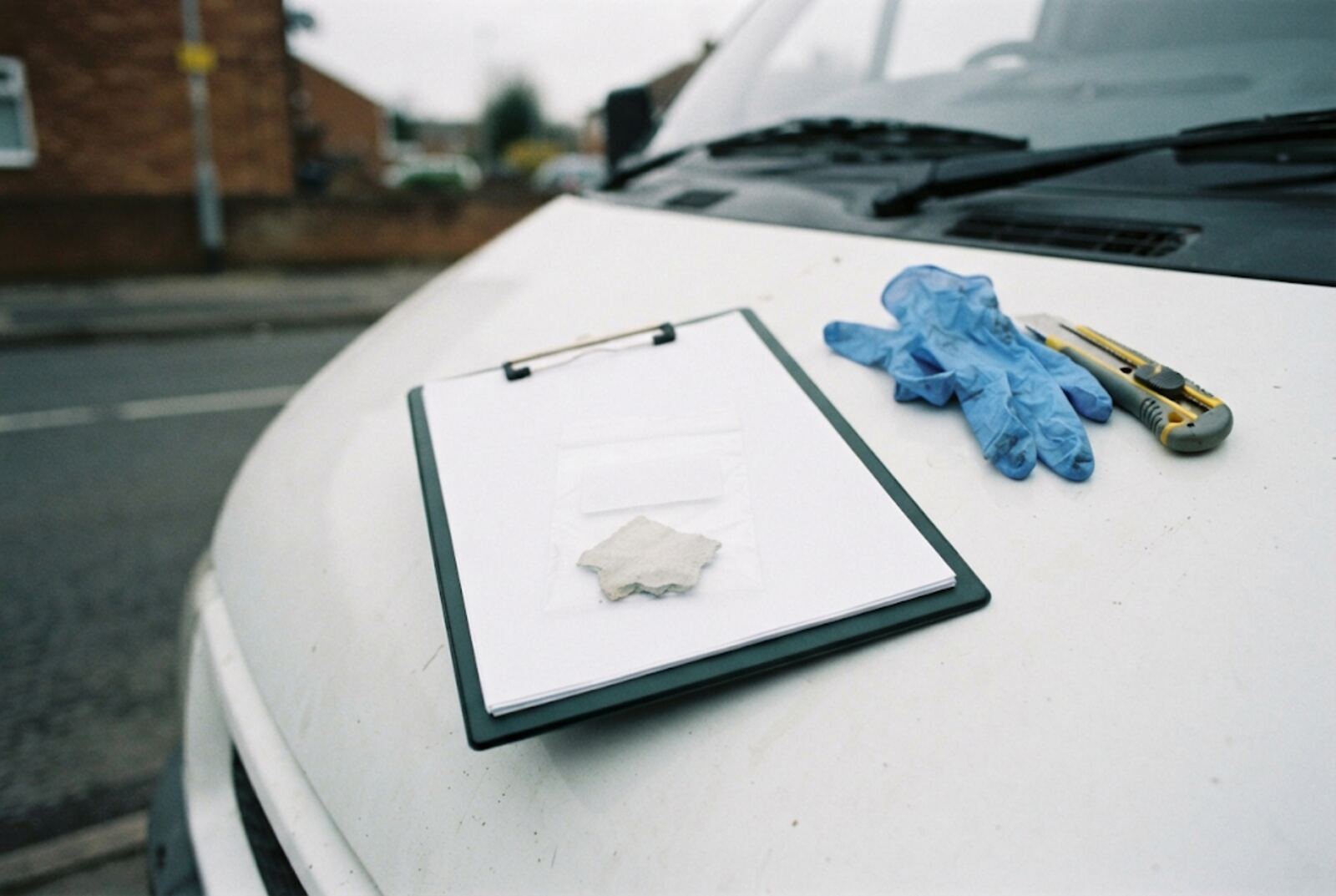
A trained person takes a small piece from an edge or broken area, wets it, seals it in a bag and sends it to a laboratory. The result is normally back within a few days. Never break a piece off yourself.
A sample from a cement sheet roof is low risk when taken correctly, which is why it is a routine job.
What the result means
If the result shows asbestos, the roof is removed by a contractor with the right training and the waste is disposed of properly. If it shows no asbestos, an ordinary roofer can replace it, which can be cheaper.
Keep the certificate. It is useful for insurance, for the sale of the property and for the contractor who removes or replaces the roof.
What it costs
A single sample and laboratory analysis is commonly charged in the region of £100 to £200 in the UK, sometimes less when combined with the removal job.
Common questions
Can I take a sample myself?
It is not recommended. Breaking a piece off a roof can release fibres. Let a trained person take it.
Is every corrugated garage roof asbestos?
No. Steel, bitumen and cement-free fibre sheets are also corrugated. That is why a sample settles it.
How old is a safe age for a roof?
Asbestos cement was widely used until the 1990s and banned in 1999, so any roof from before 2000 may contain it. A roof from after 2000 is very unlikely to.