
What the rules say
The Control of Asbestos Regulations apply to employers and the self-employed, not to a householder working on their own home. That does not make DIY safe. HSE guidance for homeowners is to use a trained contractor wherever there is a risk of disturbing the material, and to avoid doing the work yourself.
The risks in practice
Cement sheets are bonded, so a sheet that is lifted off carefully is much lower risk than lagging or sprayed coatings. The danger is breakage: a cracked sheet, a drill hole, a fall through a brittle roof or a sheet dropped from height all release fibres and put you or neighbours at risk.
Old sheets are heavy, awkward and slippery with moss. Falls from garage roofs cause serious injuries every year.
The disposal problem
Even a perfectly removed roof is waste that must go to a site licensed to accept asbestos. In Greater Manchester most household waste recycling centres do not accept it, and it is an offence to fly-tip or put it in a skip that is not licensed for it. A householder has few legal options once the roof is down.
If you still want to try
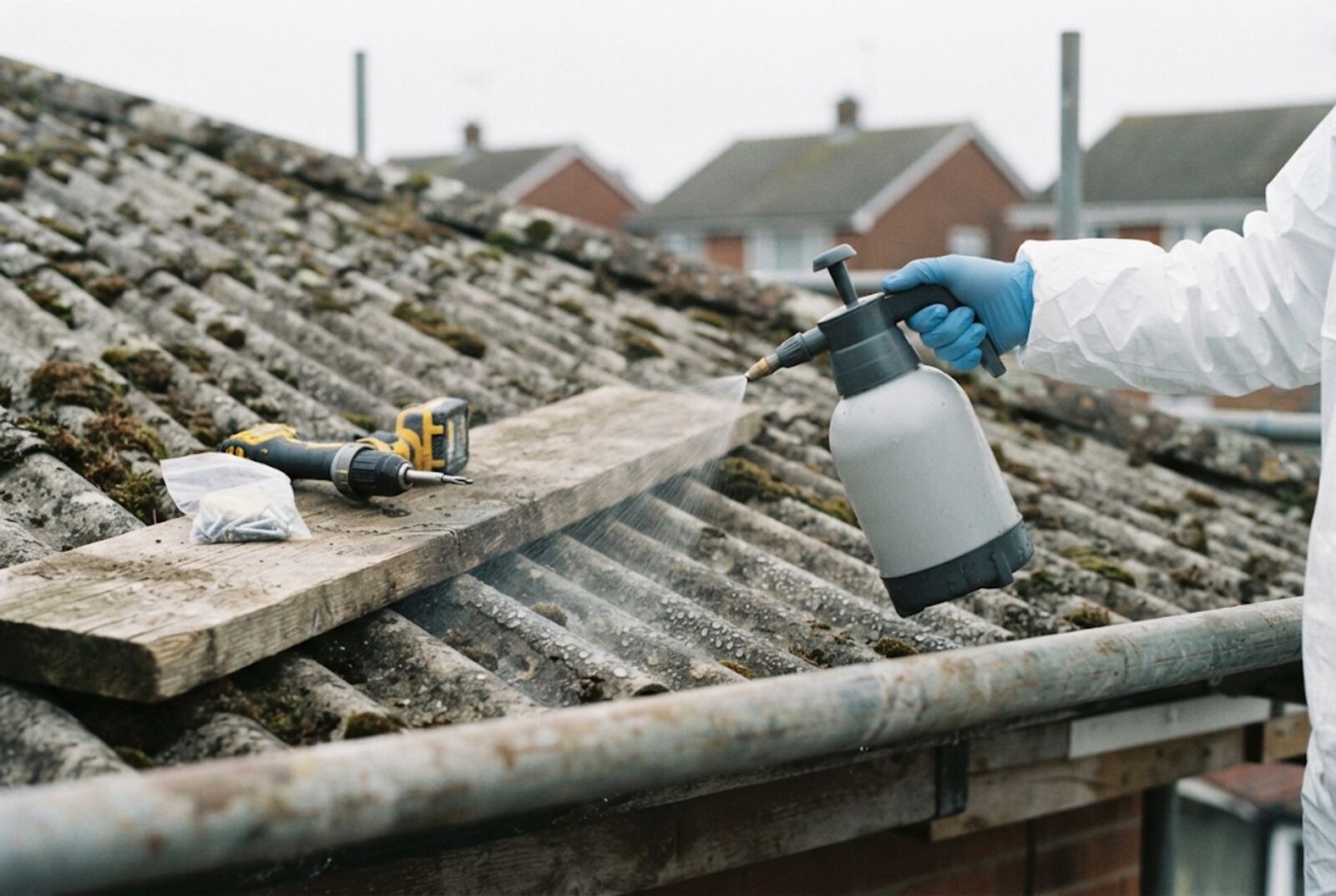
Read the HSE guidance first, wear a suitable disposable overall and an FFP3 mask, keep the sheets wet, lift them whole rather than breaking them, and double-wrap everything in heavy polythene with a warning label. Then find a licensed disposal route before you start, not after.
Compared with that effort and risk, a contractor who takes the roof off and handles the waste paperwork is usually worth the money.
Quick answers
Can I just put the sheets in a skip?
Only if the skip is licensed for asbestos waste. An ordinary skip is not, and putting asbestos in one is an offence.
Does my home insurance cover DIY removal accidents?
Many policies exclude work you are not qualified to do. Check your wording before starting.
Will the council collect it?
Some councils offer a paid collection service for small amounts of asbestos from households. Check yours.